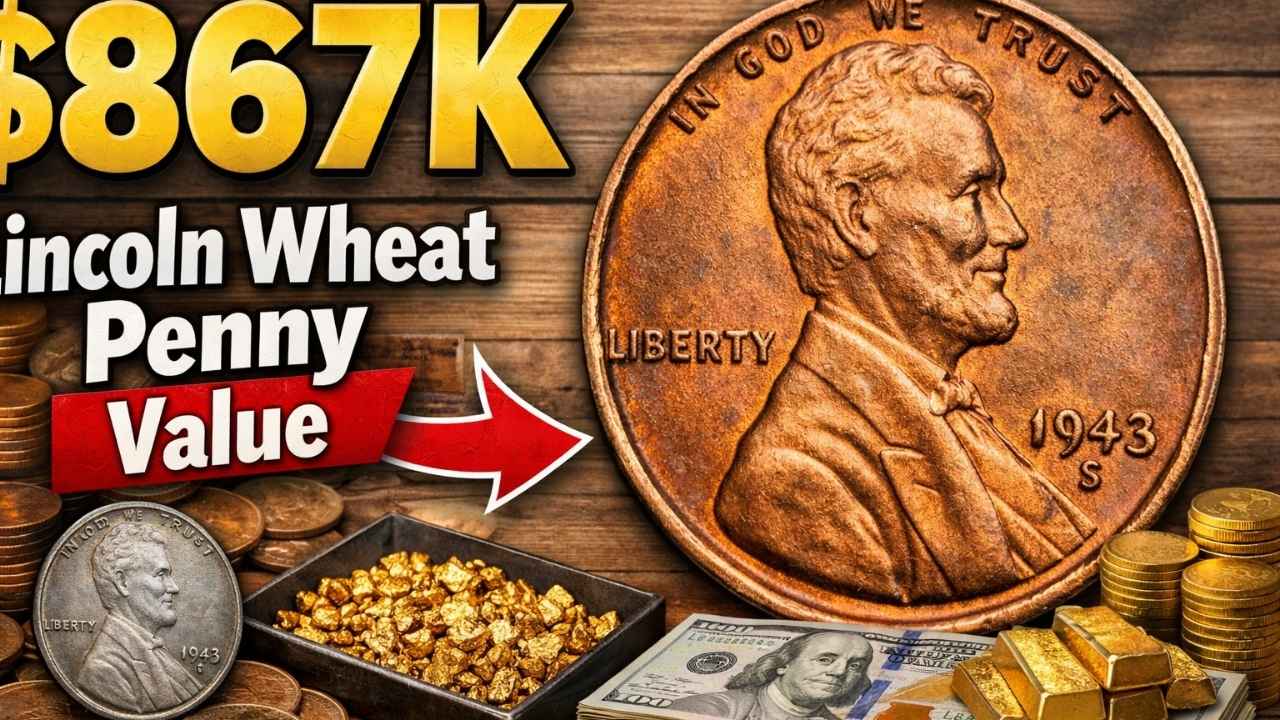
$867K Lincoln Wheat Penny Value: The Lincoln Wheat Penny, minted from 1909 until 1958, is one of the most iconic coins in American numismatics. It was the first circulating coin to feature a real person, Abraham Lincoln, on the obverse. Victor David Brenner’s design captured Lincoln’s profile with dignity, while the reverse displayed two wheat stalks symbolizing prosperity. Over nearly five decades, billions of these coins were produced, yet a handful of rare varieties and mint errors have transformed ordinary cents into treasures worth hundreds of thousands of dollars.
The $867,000 Lincoln Wheat Penny
The coin that stunned collectors with a sale price of $867,000 was a 1943 bronze cent. During World War II, copper was reserved for military use, so pennies were struck in zinc-coated steel. A few leftover bronze planchets from 1942 accidentally found their way into the presses in 1943, creating one of the most famous mint errors in American history. Only a handful of these bronze cents exist today, and their rarity combined with pristine condition explains why one sold for nearly a million dollars at auction.
Why Rarity Drives Value
Rarity is the cornerstone of coin collecting. While millions of Wheat Pennies survive, only a few are rare enough to command astronomical prices. Rarity can come from several sources:
- Mint errors such as wrong planchet strikes, double dies, or missing mint marks
- Low mintage years where fewer coins were produced
- Historical circumstances like wartime shortages that altered coin composition
Collectors prize these anomalies because they represent accidents of history, making them far more desirable than ordinary coins.

Key Dates and Varieties
Several Lincoln Wheat Pennies are considered key dates and are highly sought after:
- 1909-S VDB, the first year of issue with designer initials on the reverse
- 1914-D, a low mintage coin from Denver
- 1922 No D, a variety where the mint mark was accidentally omitted
- 1955 Double Die Obverse, a famous error with doubled lettering
While these coins are not as rare as the 1943 bronze cent, they can still fetch thousands of dollars depending on condition.

Condition and Grading
Condition plays a critical role in determining value. Coins are graded on a scale from Poor to Mint State, with additional designations such as Red, Brown, or Red-Brown for copper coins. A Wheat Penny in Mint State Red condition can be worth many times more than the same coin in circulated condition. Professional grading services provide authentication and standardized grading, which adds confidence for buyers and sellers.
Collector Demand and Market Dynamics
The coin market is driven by passion, competition, and investment potential. Collectors pay top dollar for rare Wheat Pennies because:

- They embody scarcity and uniqueness
- They carry historical significance, especially wartime issues
- Auctions create bidding wars that push values higher
- Owning such coins is a matter of prestige and pride
The emotional connection to history and the thrill of owning something few others possess make these coins irresistible to serious collectors.
Other Wheat Pennies Worth Big Money
Beyond the 1943 bronze cent, several Wheat Pennies have achieved remarkable prices:
- 1944 Steel Cent, another wartime error, sold for over $400,000
- 1955 Double Die Obverse, valued at $15,000 or more in top condition
- 1931-S, a low mintage coin worth up to $500
- 1909-S VDB, which can reach $50,000 in pristine grades
These coins demonstrate that while most Wheat Pennies are common, certain varieties can transform into valuable assets.
The Cultural Fascination with Valuable Pennies
The idea that a penny could be worth nearly a million dollars captures the public imagination. Stories of rare coins found in pocket change inspire treasure-hunting excitement. While the odds of finding a 1943 bronze cent in circulation today are virtually zero, the fascination continues to fuel interest in coin collecting. It is this blend of history, rarity, and possibility that keeps collectors engaged.
Final Thoughts
The Lincoln Wheat Penny is more than just a coin. It is a piece of American heritage, a symbol of history, and in rare cases, a financial treasure. While most Wheat Pennies are worth only a few cents to a few dollars, rare varieties like the 1943 bronze cent can command prices close to a million. Collectors pay top dollar because these coins embody rarity, history, and the thrill of discovery. The $867,000 sale is a testament to the enduring allure of numismatics and the extraordinary value that can be hidden in the smallest of coins.