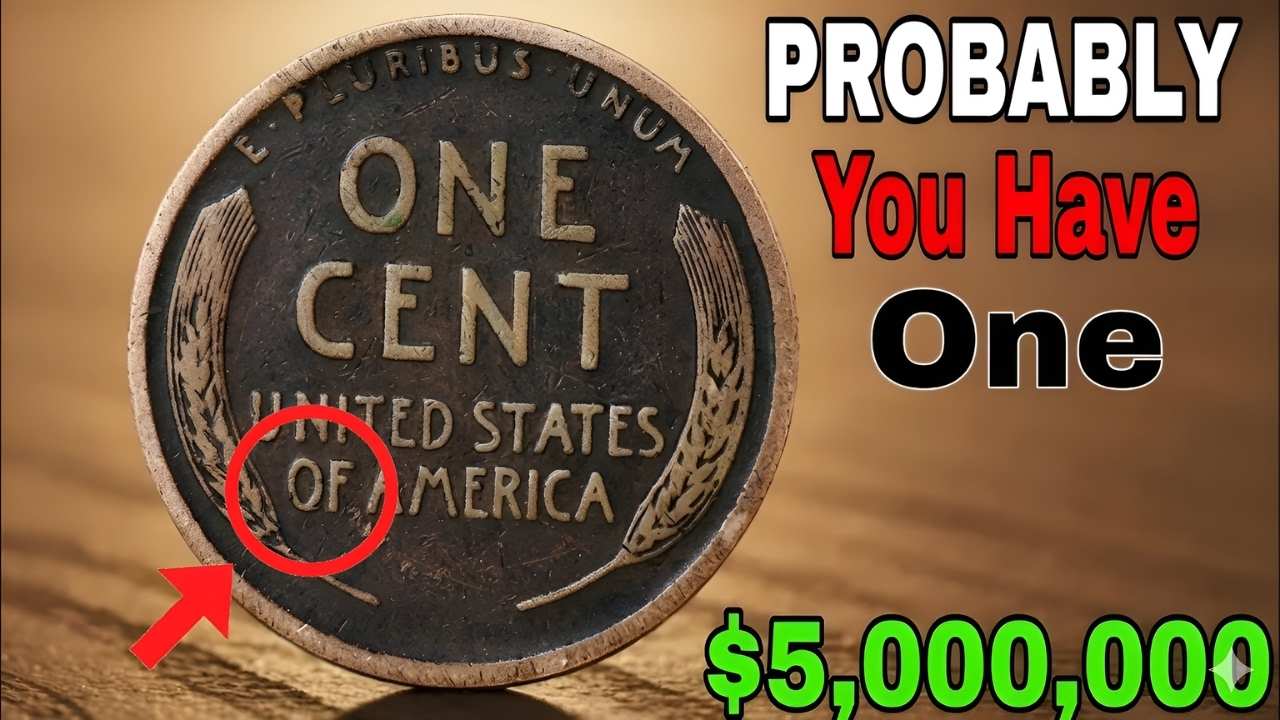
$867K Lincoln Wheat Penny Value Guide: The Lincoln Wheat Penny, minted from 1909 to 1958, remains one of the most beloved coins in American numismatics. Its simple design featuring Abraham Lincoln on the obverse and wheat stalks on the reverse has captivated generations of collectors. While most Wheat Pennies are worth only a few cents to a few dollars, certain rare examples have sold for staggering amounts, with some reaching values as high as $867,000.
Why Some Wheat Pennies Are Worth Hundreds of Thousands
The extraordinary value of certain Wheat Pennies comes down to rarity, condition, and historical significance. Coins with extremely low mintages, unique errors, or pristine preservation can command top dollar. For example, the 1943 copper Wheat Penny is one of the most famous rarities. During World War II, pennies were supposed to be struck in steel to conserve copper for the war effort. A few copper planchets were mistakenly used, creating one of the most valuable error coins in U.S. history.

The Role of Mint Marks
Mint marks are crucial in determining a Wheat Penny’s rarity. Coins struck in Philadelphia carry no mint mark, while those from Denver bear a “D” and those from San Francisco an “S.” Certain years and mint marks are far scarcer than others. For instance, the 1909-S VDB penny, with fewer than half a million minted, is one of the most sought-after coins in the series. Collectors prize these coins for their scarcity and historical connection to Victor David Brenner, the designer of the Lincoln cent.
Condition and Grading Standards
The condition of a Wheat Penny can make the difference between a coin worth a few dollars and one worth thousands. Coins are graded on a scale from Poor (P-1) to Mint State (MS-70). High-grade coins with sharp details, minimal wear, and original luster are far more valuable. Professional grading services such as PCGS and NGC provide certification that assures buyers of authenticity and condition, often increasing a coin’s market value significantly.

Famous High-Value Wheat Pennies
Several Wheat Pennies have achieved legendary status among collectors. The 1943 copper penny is the most famous, with examples selling for hundreds of thousands of dollars. Another rarity is the 1955 doubled die penny, where a striking error caused the date and lettering to appear doubled. These coins are instantly recognizable and highly prized. The 1922 “No D” penny, struck in Denver without its mint mark, is another rarity that commands high prices.
Why Collectors Pay Top Dollar
Collectors are willing to pay extraordinary amounts for rare Wheat Pennies because they represent a combination of history, artistry, and rarity. Owning a coin like the 1943 copper penny is akin to possessing a piece of American history. The thrill of the hunt also plays a role, as collectors enjoy searching through rolls of pennies or estate collections in hopes of finding a hidden treasure.

Tips for Collecting Wheat Pennies
For those interested in building a Wheat Penny collection, here are some practical tips:
- Start with common dates to build a foundation before pursuing rarities.
- Learn to recognize mint marks and varieties.
- Invest in protective holders to preserve coins from damage.
- Consider professional grading for coins that appear flawless or rare.
- Stay informed about market trends and auction results to understand current values.
The Market Outlook for Wheat Pennies
The market for Wheat Pennies remains strong, with demand driven by both seasoned collectors and newcomers. Rare varieties continue to appreciate in value, while common coins provide affordable entry points for beginners. As more people discover the hobby of coin collecting, interest in historic coins like the Wheat Penny is likely to grow.
Conclusion
The Lincoln Wheat Penny is more than just a small piece of copper. It is a symbol of American history, artistry, and the enduring appeal of coin collecting. While most Wheat Pennies are worth modest amounts, rare varieties can command prices that rival fine art or rare antiques. The $867,000 valuation of certain examples underscores the incredible potential hidden in these humble coins. For collectors, the Wheat Penny offers both an accessible starting point and the possibility of uncovering a true numismatic treasure.