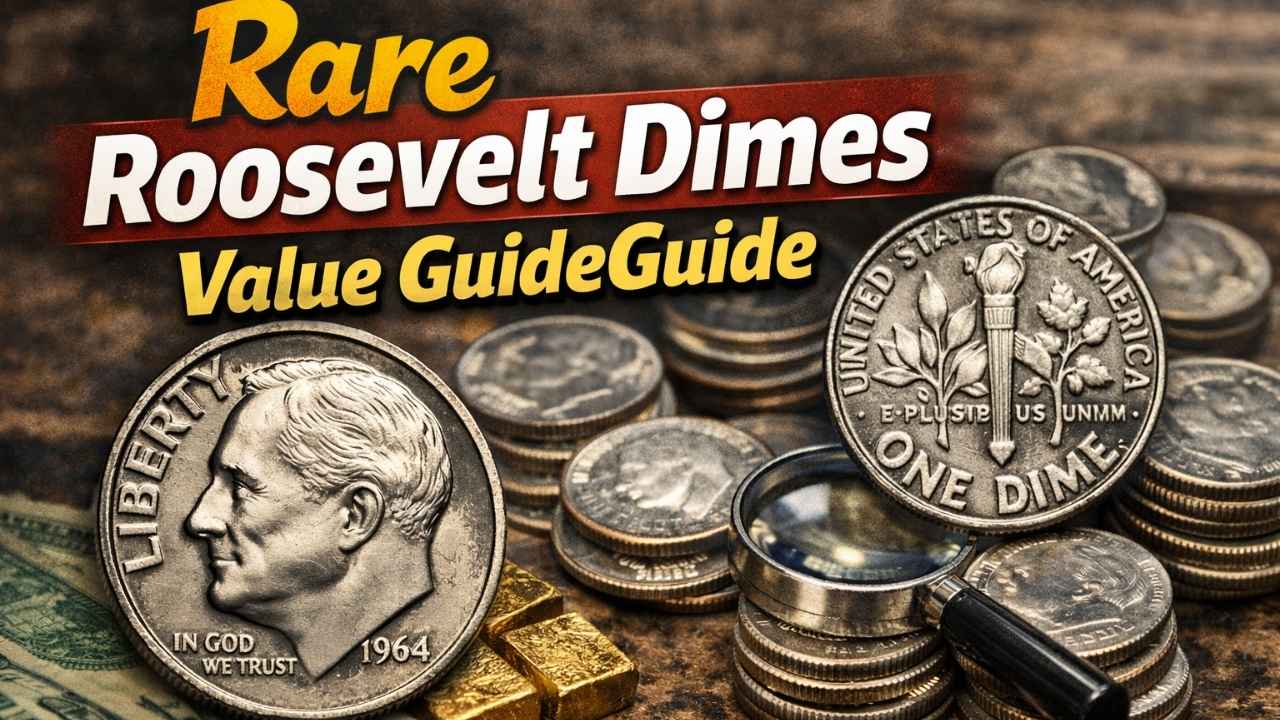
2026 Rare Roosevelt Dimes Value Guide: The Roosevelt dime has been a staple of American coinage since 1946, created to honor President Franklin D. Roosevelt after his passing. While most dimes are common and circulate widely, certain rare issues and error coins have become highly prized by collectors. In 2026, the market for Roosevelt dimes continues to evolve, with values influenced by scarcity, condition, and collector demand.
Key Factors That Influence Value
The value of a Roosevelt dime depends on several interconnected factors. Scarcity is the most obvious driver, as coins with low mintages or unique errors are naturally more desirable. Condition, measured by grading standards, plays a critical role as well. A dime in pristine Mint State condition can be worth exponentially more than the same coin in circulated condition. Finally, collector demand and market trends shape the prices, with certain dates gaining popularity due to historical significance or recent auction results.
Rare Dates and Mintmarks
Among Roosevelt dimes, a handful of dates and mintmarks stand out as particularly rare. The 1949-S is one of the earliest scarce issues, with limited mintage and strong demand. The 1955 doubled die obverse is another legendary rarity, recognized for its dramatic doubling visible to the naked eye. Later issues such as the 1968 No-S Proof and the 1975 No-S Proof are highly coveted, with only a few known examples. These coins often command prices in the tens of thousands or even higher depending on grade.
Error Coins and Varieties
Error coins add another layer of intrigue to Roosevelt dime collecting. Off-center strikes, clipped planchets, and doubled dies are among the most sought-after varieties. The 1982 No-P dime, struck without the Philadelphia mintmark, is a famous example that continues to attract attention. Collectors prize these coins not only for their rarity but also for the fascinating glimpse they provide into the minting process.

Grading Standards and Their Impact
Professional grading services such as PCGS and NGC have standardized the evaluation of coin condition, making it easier for collectors to understand value. Grades range from Poor (P-1) to Mint State (MS-70). For Roosevelt dimes, the difference between MS-65 and MS-67 can mean hundreds or even thousands of dollars in value. Proof coins are graded separately, with Cameo and Deep Cameo designations adding further premiums. In 2026, collectors continue to rely heavily on certified grades when buying and selling rare dimes.
Current Market Pricing
The market for Roosevelt dimes in 2026 reflects both stability and growth. Common circulated dimes from the 1940s through the 1960s often trade for modest premiums above face value, especially if they contain silver. Rare dates and varieties, however, command significant sums. For example, a 1949-S in MS-65 condition may sell for several hundred dollars, while a 1975 No-S Proof can reach into six figures. Auction records show continued enthusiasm for top-grade examples, with collectors willing to pay substantial premiums for coins that combine rarity and condition.

Collector Insights and Strategies
Collectors in 2026 approach Roosevelt dimes with a mix of passion and strategy. Many focus on building complete date-and-mintmark sets, while others specialize in error coins or proof issues. Patience and research are essential, as rare coins often appear infrequently on the market. Networking with other collectors, attending coin shows, and following auction results are effective ways to stay informed. Some collectors also view Roosevelt dimes as a long-term investment, noting that values for key rarities have steadily increased over the decades.
The Role of Silver Content
Roosevelt dimes minted before 1965 contain 90 percent silver, giving them intrinsic value beyond their numismatic appeal. In times of rising silver prices, these coins attract additional interest from investors. While most silver dimes are common, their bullion value ensures they remain desirable. Collectors often distinguish between silver and clad issues, with silver examples forming the backbone of many collections.

Auction Highlights and Record Sales
Recent auctions have underscored the strength of the Roosevelt dime market. High-grade examples of the 1949-S and 1955 doubled die have achieved impressive prices, while the ultra-rare 1975 No-S Proof continues to set records. These sales highlight the enduring appeal of Roosevelt dimes and the willingness of collectors to pay top dollar for exceptional coins. Auction houses report strong participation from both seasoned numismatists and new entrants to the hobby.
Future Outlook
Looking ahead, the Roosevelt dime market in 2026 appears healthy and vibrant. The combination of historical significance, rarity, and affordability makes these coins attractive to a wide range of collectors. While the most famous rarities will always command high prices, even modest collections can provide enjoyment and potential appreciation. As grading standards remain consistent and auction records continue to be set, Roosevelt dimes are likely to remain a cornerstone of American numismatics.
Conclusion
The Roosevelt dime, though small in size, carries immense value in the world of coin collecting. From rare dates and mintmark varieties to fascinating error coins, these dimes offer collectors a rich field of study and investment. In 2026, the market reflects both tradition and innovation, with values shaped by history, condition, and demand. For collectors, the pursuit of rare Roosevelt dimes is more than a financial endeavor—it is a journey into the story of American coinage and the enduring legacy of Franklin D. Roosevelt.