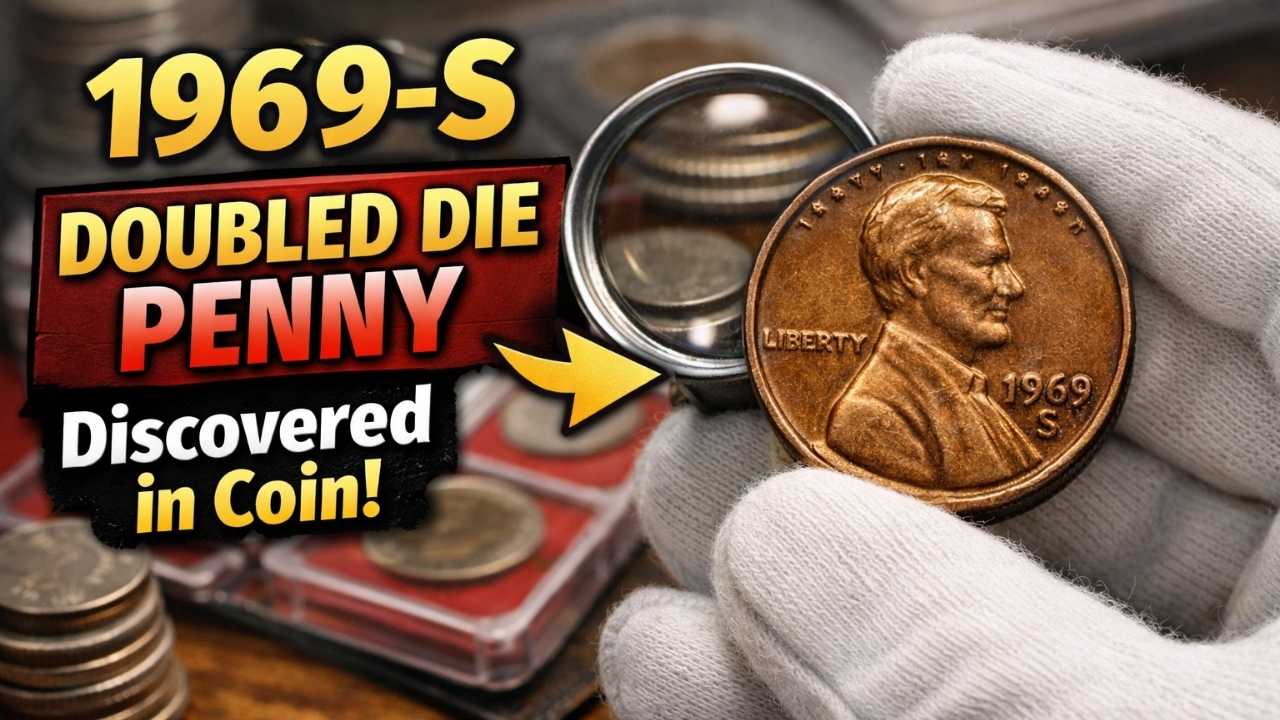
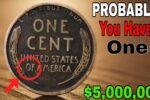
1969-S Doubled Die Penny Discovered in Coin: Few stories in numismatics capture the imagination quite like the discovery of rare coins in the most ordinary of places. Recently, a 1969-S Doubled Die Lincoln Cent emerged from a simple coin jar, astonishing collectors and enthusiasts alike when it fetched an incredible $750,000 at auction. This event not only highlights the enduring allure of coin collecting but also underscores the remarkable history behind one of the most coveted errors in American coinage.
The Origins of the 1969-S Doubled Die Penny
The 1969-S Doubled Die Penny is one of the most famous error coins in U.S. history. Minted in San Francisco, it features a dramatic doubling of the obverse design, most notably in the inscriptions “LIBERTY” and “IN GOD WE TRUST.” Unlike minor varieties that require magnification to detect, this doubling is bold and unmistakable, making it a standout among error coins.
The error occurred during the die-making process, when a working die received a misaligned second impression from the hub. This resulted in a doubled image that was then transferred onto every coin struck by that die. Only a handful of these coins escaped into circulation, making them exceedingly rare.
A Coin Jar Discovery
The recent discovery of this penny in a coin jar is the kind of story that fuels the dreams of collectors everywhere. Imagine sifting through loose change, expecting nothing more than common cents, only to uncover a treasure worth nearly a million dollars. Such finds remind us that extraordinary value can sometimes hide in plain sight.
The individual who found the coin had no idea of its significance at first. It was only after consulting a local coin dealer that the rarity was confirmed. From there, the penny’s journey to auction was swift, culminating in a record-breaking sale that stunned even seasoned numismatists.
Why Error Coins Captivate Collectors
Error coins like the 1969-S Doubled Die Penny hold a special place in the hobby. They represent a fascinating intersection of human oversight and mechanical imperfection, resulting in unique artifacts that defy the uniformity of mass production. Collectors prize them not only for their rarity but also for the stories they tell about the minting process.

The appeal lies in their unpredictability. While most coins are struck to exacting standards, errors slip through the cracks, often unnoticed until years later. Each discovery rekindles the excitement of the hunt, reminding collectors that treasures may still be lurking in everyday change.
The Auction and Its Impact
The auction of the 1969-S Doubled Die Penny drew widespread attention, with bidders from around the world vying for the chance to own a piece of numismatic history. The final hammer price of $750,000 set a new benchmark for this variety, underscoring its status as one of the most desirable coins in the Lincoln Cent series.

Such sales have ripple effects throughout the hobby. They inspire renewed interest in coin collecting, encourage enthusiasts to examine their own collections more closely, and elevate the visibility of numismatics in mainstream culture. For many, the story of this penny serves as a reminder that coin collecting is not just about accumulation but about discovery.
The Legacy of the Lincoln Cent
Introduced in 1909 to commemorate the centennial of Abraham Lincoln’s birth, the Lincoln Cent has become one of the most enduring coins in American history. Over the decades, it has seen numerous design changes, minting innovations, and, occasionally, striking errors. The 1969-S Doubled Die Penny is among the most celebrated of these anomalies, cementing its place in the broader narrative of the Lincoln Cent.

Collectors often view the Lincoln Cent as a gateway into numismatics. Its accessibility, combined with the potential for rare finds, makes it an ideal starting point for beginners. Yet, as the recent auction demonstrates, even seasoned collectors continue to be captivated by its surprises.
Lessons for Collectors
The discovery of the 1969-S Doubled Die Penny offers several lessons for collectors and enthusiasts:
- Always check your change carefully. Rare coins can appear in the most unexpected places.
- Learn to recognize key varieties and errors. Knowledge is the key to spotting treasures.
- Consult experts when in doubt. Professional authentication can make the difference between a common coin and a life-changing discovery.
- Appreciate the history behind each coin. Beyond monetary value, coins are artifacts that connect us to the past.
The Human Element in Coin Collecting
At its core, coin collecting is about more than metal and mint marks. It is about the thrill of discovery, the joy of learning, and the connections forged through shared passion. Stories like the 1969-S Doubled Die Penny remind us that numismatics is a human endeavor, shaped by curiosity, perseverance, and sometimes sheer luck.
The individual who found the penny in a coin jar may not have set out to uncover a rarity, but their experience resonates with collectors everywhere. It is a testament to the idea that treasures are not always hidden in vaults—they can be waiting in the palm of your hand.

Looking Ahead
As coin collecting continues to evolve, the allure of rare errors will remain strong. Advances in technology may make it easier to detect varieties, but the excitement of stumbling upon a rarity will never fade. The 1969-S Doubled Die Penny will continue to inspire collectors, serving as both a cautionary tale of minting mishaps and a beacon of possibility.
Future discoveries may yet rival its fame, but for now, this penny stands as a symbol of numismatic wonder—a reminder that even the smallest coin can carry immense value.
Conclusion
The story of the 1969-S Doubled Die Penny discovered in a coin jar and sold for $750,000 is more than a tale of financial gain. It is a celebration of the enduring magic of coin collecting, where history, chance, and human curiosity converge. For collectors, it reaffirms the belief that every coin has a story, and sometimes, that story can change lives.